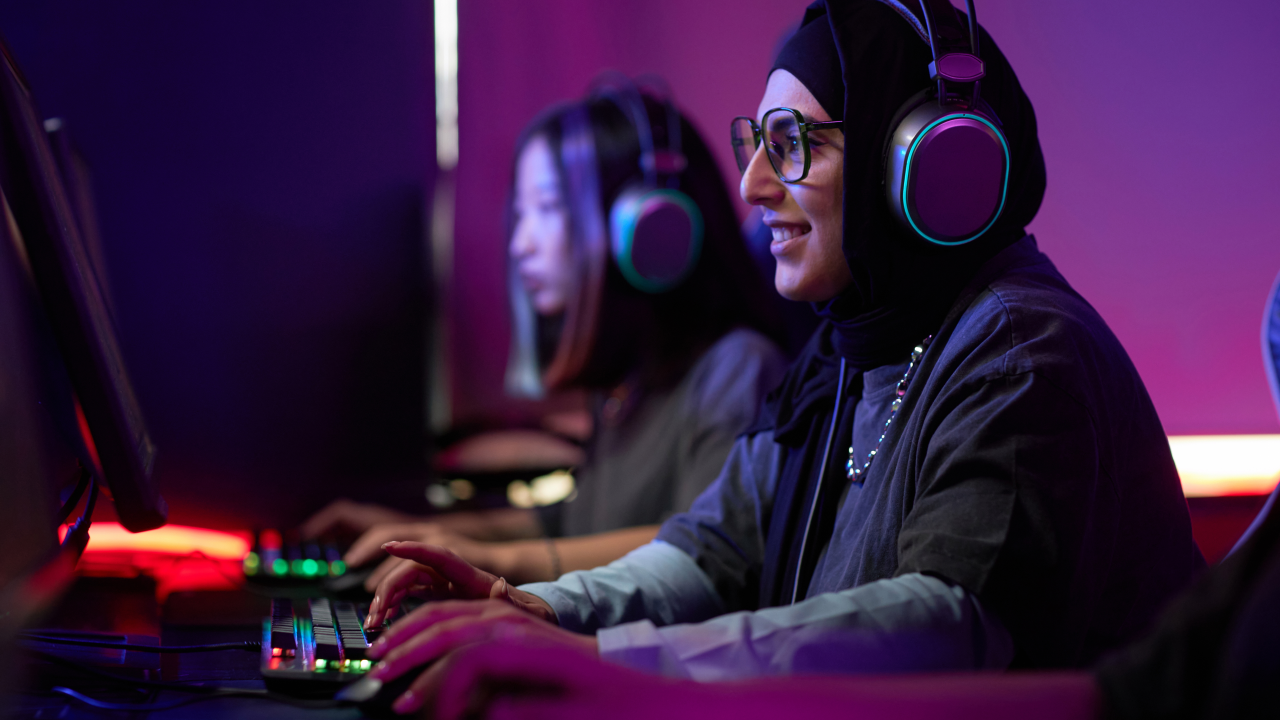
Ask someone why they play games, and you'll get a range of answers. The challenge. The story. The escape. The mechanics. But spend enough time with regular players, and another reason surfaces more often than the headline reasons do: the people.
Gaming communities are, for a meaningful number of people, genuine social infrastructure. Regular players, groups, clans, and friendships that started in a game lobby and extended into real life. For people who find traditional social settings difficult, competitive gaming communities have sometimes provided a structured, low-stakes way into connection that they wouldn't have found elsewhere. That's worth taking seriously — both for what it offers and for the responsibility it implies.
What Makes a Community, Actually
The word "community" is used loosely in online gaming. A game's player base isn't a community. A Discord server with ten thousand members isn't automatically a community. A subreddit where people post clips isn't a community. These things can host communities, or support the development of them, but community itself is something more specific: a network of people with shared investment in each other's experiences, governed by shared norms, with enough continuity that relationships develop over time.
By that definition, genuine gaming communities are actually relatively rare, despite the millions of people who play games online. Many players participate in game after game in effectively anonymous contexts — they never encounter the same person twice, they don't develop relationships with anyone, and the people around them are essentially interchangeable. The game might be excellent, but the human dimension is mostly absent.
The difference between this and a genuine community isn't primarily platform or format. It's investment. Communities form when participants care about the shared context — when the outcome of an event matters not just because of what it means for you, but because of what it means for the other people involved. This requires seeing other participants as individuals rather than abstractions, which requires some degree of continuity: knowing who plays, recognising names and faces (or avatars), and having some shared history.
Why It Matters for the Gaming Experience
There's a fairly straightforward reason why community enriches gaming: games are more engaging when other people's involvement adds meaning. A win in a genuinely competitive context — where you know the people you beat, where there's a history of past encounters, where both sides care about the outcome — feels qualitatively different from a win against anonymous strangers. The game is the same, but the human context transforms the significance.
This is why long-standing competitive gaming communities often produce participants who are more invested in the game than their skill level alone would predict. They're not just playing the game — they're playing the game with and against people they know, within a context that has accumulated meaning over time. The game becomes a stage for relationships and rivalries that extend beyond any individual match.

Community also provides accountability structures that are genuinely valuable for skill development. When you know that the people you play with and against are going to form opinions about how you conduct yourself — not just whether you win, but how you communicate, how you handle frustration, whether you follow through on commitments — you behave differently than you would in a fully anonymous context. This isn't always comfortable, but it tends to produce better players and better people.
The Problem With Scale
One of the genuine tensions in online gaming community building is that scale and community quality often work against each other. Small communities are typically more cohesive — everyone knows each other, norms are maintained through social pressure, new members are welcomed personally, and disputes get resolved through relationships rather than rules. But small communities are also fragile: a few people leaving, a key organiser burning out, or a single badly-handled dispute can unravel things quickly.
Larger communities have more resilience in some ways — they can absorb turnover, they have more diverse resources, they produce more events and content. But they lose the intimacy that makes community feel meaningful. At a certain scale, the shared investment that defines community gives way to something more like an audience — people consuming from the same source without much investment in each other.
The most successful gaming communities I've worked with have found ways to maintain the intimacy of smaller groups within larger structures. This often means having dedicated sub-groups — game-specific channels, recurring event teams, coaching cohorts — that operate with more continuity and personal investment than the larger community, while still benefiting from being part of something bigger.
Community Standards and Culture
Every community has a culture, whether or not anyone has intentionally shaped it. In the absence of deliberate cultivation, gaming community cultures often default toward the norms of competitive online gaming more broadly — which can include toleration of harassment, normalisation of poor sportsmanship, and a hierarchy based primarily on skill that leaves less experienced players feeling unwelcome.
Communities that deliberately cultivate their culture — that make explicit what they value, that enforce those values consistently, that welcome newcomers actively rather than passively — end up significantly different from those that don't. This doesn't happen automatically, and it requires ongoing maintenance: it's easier to let standards slip than to hold them, and a community culture that took years to build can deteriorate significantly in a few months if no one is actively tending to it.
The most common mistake I've seen in community management is inconsistency — applying standards strictly to some members and loosely to others, or enforcing rules vigorously when complaints are loud and ignoring them when things are quieter. Inconsistency destroys trust faster than almost anything else, because it signals that the stated values aren't the real ones.
Digital Connection and Its Limits
It would be disingenuous to discuss gaming community without acknowledging some of the real tensions around digital connection. Online relationships can be genuine and meaningful — the evidence for this is abundant — but they have characteristics that differ from in-person relationships in ways that matter.

Anonymity, or partial anonymity, changes social dynamics in ways that tend to reduce accountability. The physical and social cues that regulate in-person behaviour are absent. Misunderstandings that would be resolved quickly in person can escalate online because of the absence of tone, expression, and immediate feedback. And the asynchronous nature of much online communication means that conflicts can smolder for longer than they would otherwise.
None of this means that online gaming communities are inevitably inferior to in-person ones — the in-person comparison isn't really the right one anyway, given that these communities enable connection between people who would otherwise have no social context in common. But it does mean that good online community management needs to be conscious of these dynamics and design around them.
Structures that reduce anonymity — consistent usernames, community profiles, contribution history — tend to improve conduct. Communication norms that encourage good-faith engagement reduce escalation. And making space for community members to know each other as people rather than just as players — through non-competitive events, structured introductions, optional voice communication — builds the kind of genuine investment that makes a community worth being part of.
Looking After People Within Communities
One dimension of gaming community that deserves more attention is the welfare of participants. Communities that take player wellbeing seriously — that notice when someone seems to be struggling, that don't normalise excessive playing, that create space for people to step back without it being treated as a defection — are not only healthier environments but typically more sustainable ones as well. People who feel looked after don't burn out as quickly and don't leave as abruptly.
This doesn't mean that gaming communities should operate as support services. But it does mean being honest about the fact that the people in your community are whole people with lives beyond the game, and that a community that ignores the human dimension of its members in favour of pure competitive output is missing something important.
The Value of Getting It Right
When gaming communities work — when the structure is right, the culture is healthy, the relationships are genuine — they produce something that's genuinely hard to find elsewhere: a recurring, voluntary gathering of people who show up because they want to be there, competing and collaborating and disagreeing and occasionally annoying each other in the way that people who actually know each other do.
That's not a small thing. In a landscape where much of online interaction is anonymous, performative, or algorithmically mediated, a community where people know each other by name, have shared history, and genuinely invest in each other's experiences is worth building and worth protecting.
It takes effort to build one, and ongoing effort to maintain it. But for the people inside it, it's usually the part of gaming they remember longest — not the individual wins or the ranking achievements, but the particular people they played with, the ongoing stories that only existed within that specific community, the sense of belonging to something that was genuinely theirs.